Friday, April 21, 2017

Vicksburg

On our way through the South we stopped at Vicksburg Mississippi to learn more about the Battle for Vicksburg in the Civil war. Vicksburg is located on high bluffs overlooking the Mississippi River and had control over any water transportation using the river. The Union needed to remove that control to weaken the Confederacy and split it in half.

The location of Vicksburg and the strong defense made this a very difficult task. The battlefield museum explains the various approaches used to take the city and what finally worked.


The visitor center/museum has a collection of various arltillery pieces on display.


Recreations of defensive breastworks were shown to give an idea of the defenses in place to defend the city.


The visitor center has an interactive display showing colored lights that indicate the various battles for the city
The city was under constant bombardment which caused the citizens to dig caves and live in them for protection
Canons are located around the park at appropriate locations showing the battle layout

Plaques are located to tell of the events at each location. They are color coded for North and South.


Monuments of all sizes are located on the battlefield to honor those who fought and died.


Photographs of the period showed what it looked like "THEN"

and "NOW"

Many monuments honored those who perished
Many examples of various charges were explained on storyboards. I've included just a few.


The CAIRO was a Union Gunboat that has the distinction of being the first warship to be sunk by an electronically controlled mine set off by a soldier on the shore. (Mines were called "Torpedoes" during the Civil War. The CAIRO was later raised and the remains put on display.

The gunboat display is kept under a dramatic tent structure.

Recreations of the upper structure are placed over the remains of the hull

A very nice museum explains the history of the gun boat


Bent railroad rails were used as added protection of the crew


A very nice model of the CAIRO showed her appearance when new.


Today the park is a very peaceful and beautiful location which belies the carnage of the Civil War
A 21 foot motor home is about the biggest vehicle you'd want to take on a tour of the park

Monday, April 17, 2017

St Charles Streetcars

The RV campground in New Orleans told us that the best way get around downtown New Orleans in a motorhome is not to attempt it. They suggested we drive to a location called River Bend and park the RV next to the railyard across the street from Cooter Browns Tavern and pick up the St. Charles street car a block away and ride it downtown. This advice worked out very well and is how we got around for the three days we were there.

The St Charles line is comprised of antique streetcars from the early 1900's. These have been restored and are classics of streetcar design. You can purchase a "Jazzy" pass for $3.00 and ride as much as you want for the next 24 hours.

The streetcar travels thru the Garden district of New Orleans and offers a great sightseeing viewpoint of great architecture and fabulous homes. 

You can see our motorhome in the center of the image while we stand at the street car stop


They are very popular in the afternoon and one often has to wait for a streetcar with room


Friday, April 14, 2017

Barksdale AFB

We had a trip to the South on our bucket list and took much of March 2017 to make the trip.

One of the stops was to see the aircraft on display at Barksdale Air Force Base in Shreveport, Louisiana.

A variety of aircraft from WWII to the present are on display outside, staged along a walkway. This is an active AFB and strict security is in effect - ID must be shown, no weapons, vehicle searches and the like.


The P51 Mustang was the first fighter with the range to be able to protect WWII Bombers all the way to and from the targets. This particular aircraft apparently had quite the war history based on the markings.


This B17 was the "G" model which provided a forward machine gun to defend against frontal attacks intended to kill the pilots.


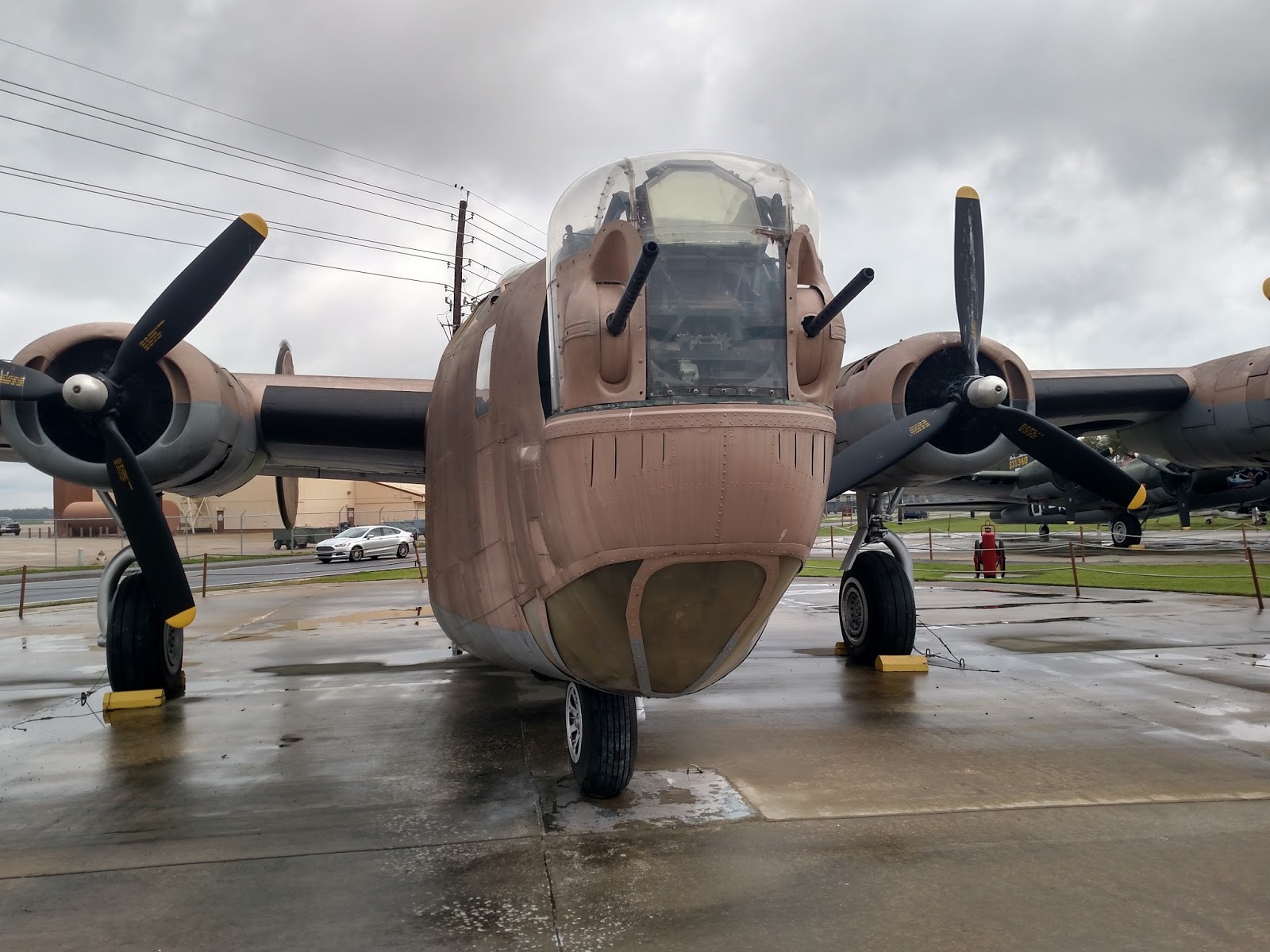
This is an example of the most produced bomber of WWII, the B24 Liberator. This is an especially rare 'J' model, the last of its kind in the world.


I was pleased to see the following Beechcraft aircraft. These were made by my company to support the War effort. One model was used as a transport, the other to train navigators and bombardiers.


Examples of other much larger aircraft were also on display. Outdoor storage is hard on museum aircraft and resources to keep them in top shape appear to be lacking. See them sooner rather than later.