Friday, May 12, 2017

Louisiana State Capital in Baton Rouge

We stopped to explore the Louisiana State capital in Baton Rouge. We read the views from the top floor were spectacular and we wanted to see the location of where Huey P Long was assassinated.  


We were run thru security just inside this door and found my Leatherman tool was not allowed so I had to go leave it in our vehicle and return. 

Just inside the door was a canoe carved from one Cyprus log. It was a beautiful piece of woodworking.

The main lobby was beautifully finished


The views from the top floor were indeed beautiful


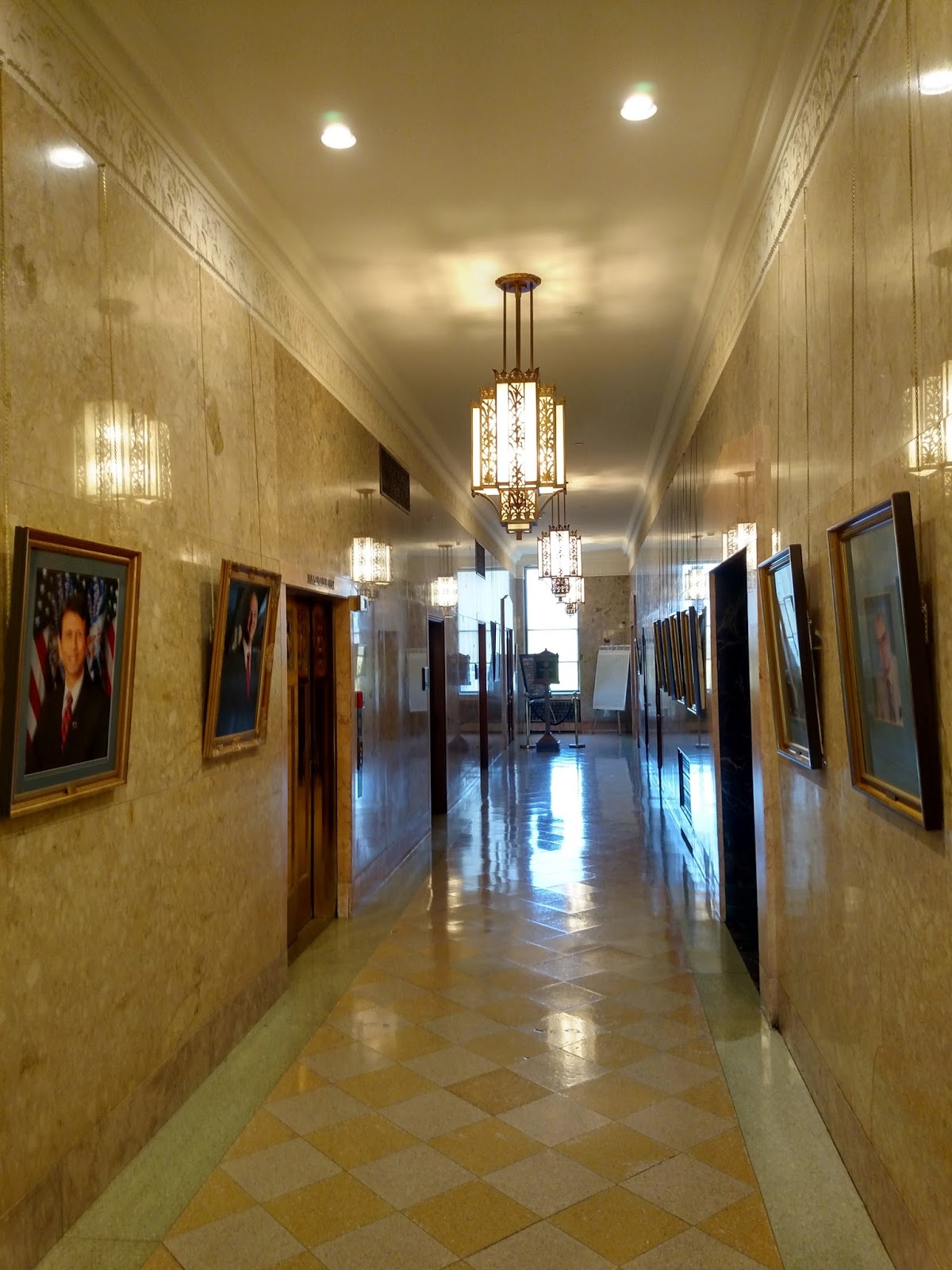
The location in the hallway of the Capital where Huey P Long was shot was well marked with considerable documentation. To this day there remains controversy as to exactly what happened, however the current thinking is Mr Long was shot twice. One bullet was from the assassins weapon and the other was a result of cross fire from Mr. Longs body guards. One of the  bullets did undiscovered damage that caused his death a few days later. An internet search will turn  up the medical report of the shooting if you have an interest.


This is the hallway where the shooting took place. There are still bullet impacts visible on the marble from the cross fire from the body guards.


The Senate chambers


This building is worth a visit if you find yourself in the area.

Sunday, May 7, 2017

Louisiana State Museum

Baton Rouge, Louisiana is the home to the Louisiana State Museum. This architecturally interesting building showcases exhibits telling about the state, its people and resources.


I enjoyed reading this part of the story of the Louisiana purchase. Reminds me it is sometimes easier to ask forgiveness than to get permission.


The history of the assassinated Huey P Long in the 1930's is still being 'cussed and discussed'


Tuesday, May 2, 2017

Melrose Mansion

The Melrose Plantation House is located in Natchez Mississippi. This is a rather remarkable home and grounds which through a series of good fortunes stayed original and intact to the present time, furnishings and all.

This home was built by a successful plantation owner to showcase his wealth and survived the Civil War. It includes all of the surrounding buildings including the slave quarters. Due to the efforts of successive owners and freed slaves who continued to live on the grounds, the home has become a National Historic Park and is open for tours


This is the entrance to the Historic park which actually leads you to the back side of the house and the quarters for the slaves that ran the household.

This shows the home used by the slaves who maintained the house and did the cooking

This is the backside of the house and service entrances


This is the front side of the home and where visitors would arrive


The marble like finish is all Faux and was painted on a stucco base

Stately trees and formal gardens made this a nice place to explore the grounds

Slave quarters for the field hands and the barn/carriage house were open for tour


The original carriages of the time period were preserved

All of the interior furnishings were original


The device over the table was a "shoofly" and was manned by a slave who gently pulled the rope to move it to create a breeze for the diners


This image shows the original linoleum floor and the matching carpet the park service has created to preserve the original linoleum. This seems to be a source of much consternation as visitors can walk on the carpet, but not the linoleum. However the good quality of the match makes it easy to step "Out of Bounds' which results in an admonishment to not do so.


All in all a nice place to visit to see how wealthy folks lived in the times of the Civil War